The Supreme Court of Virginia is one of the oldest continuous judicial bodies in the United States. Browse the timeline below to review landmark moments in the development of the judicial branch in Virginia, from colony to commonwealth.
Please note: the images and recordings you are accessing are provided for your personal and/or scholarly use, and you are responsible for obtaining any copyright permissions that may be required for your further uses.
1619
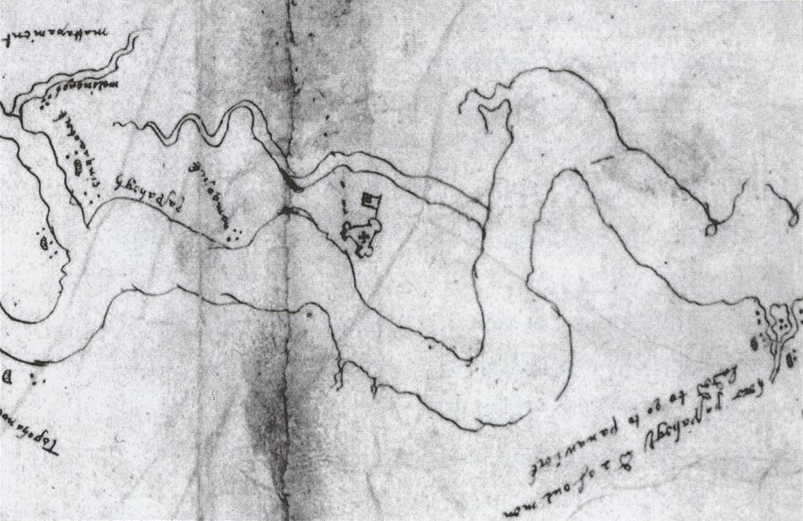
Source: The Zuniga map of James Fort, 1608. Ministerio de Educación y Cultura de España, Archivo General de Simancas, MPD.
General Assembly convenes
Judicial powers in colonial Virginia were vested in the General Assembly, which passed laws creating and regulating courts in the colony. The democratically elected legislature also functioned as the court of last resort, reviewing decisions of lower courts, until 1682. Read more at Historic Jamestowne.
1624

Source: James Shelton [CC BY-SA 3.0], via Wikimedia Commons.
Local courts established
In 1624, the General Assembly established the first local courts in Virginia, in Charles City and Elizabeth City counties. The local courts had civil jurisdiction for small disputes (100 pounds of tobacco or less) and criminal jurisdiction for petty offenses. The Governor and Council appointed the judges, initially called commissioners and later justices of the peace. County courts became powerful self-perpetuating bodies and controlled local government for much of Virginia’s history.
1632

Source: H. R. McIlwane, ed., Minutes of the Council and General Court of Colonial Virginia 1622–1632, 1670–1676 (Richmond: Library of Virginia, 1924), 111–112.
Quarter Court begins meeting in Jamestown
In 1632, the General Assembly passed a law requiring the Governor and Council sit as a court four times a year in Jamestown. The jurisdictions of the Quarter Court and county courts overlapped to some extent in the early years, but as the population grew, more cases were delegated to the county courts.
1661

Copyrighted work available under Creative Commons Attribution only license CC BY 4.0.
General Court replaces Quarter Court
In 1661, the General Assembly changed the name of the Quarter Court to the General Court and gave it original jurisdiction for criminal cases involving “life and member” as well as large civil cases (more than 1,600 pounds of tobacco or 16 pounds of sterling). The statute also required all courts adopt procedures to ensure more uniform and orderly sessions, including the “Oyez, Oyez” call to order still used today.
1682
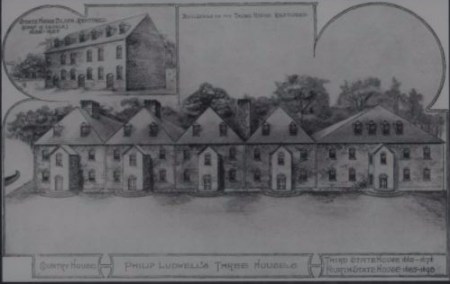
Source: National Park Service.
General Assembly relinquishes right to hear appeals
In 1682, the King ordered the General Assembly, with its democratically elected lower house, to give up the power to hear appeals from the General Court. Henceforth the General Court, comprised of the Governor and Council, was the court of last resort in Virginia.
1692
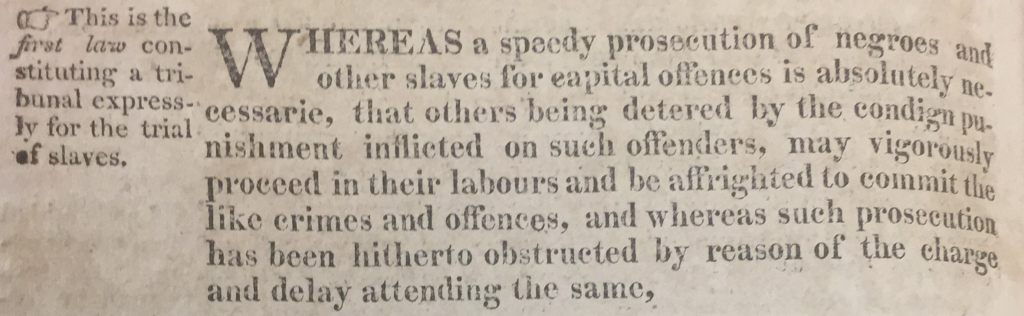
Source: The Statutes at Large; Being a Collection of the Laws of Virginia from the First Session of the Legislature in the year 1619, compiled by William Waller Hening, v. III, p. 102.
Special courts eliminate right to jury trial
In 1692, the General Assembly passed a statute creating special courts of oyer and terminer for enslaved people accused of crimes. The law enabled localities to try and punish the accused quickly, without benefit of a jury trial.
1710
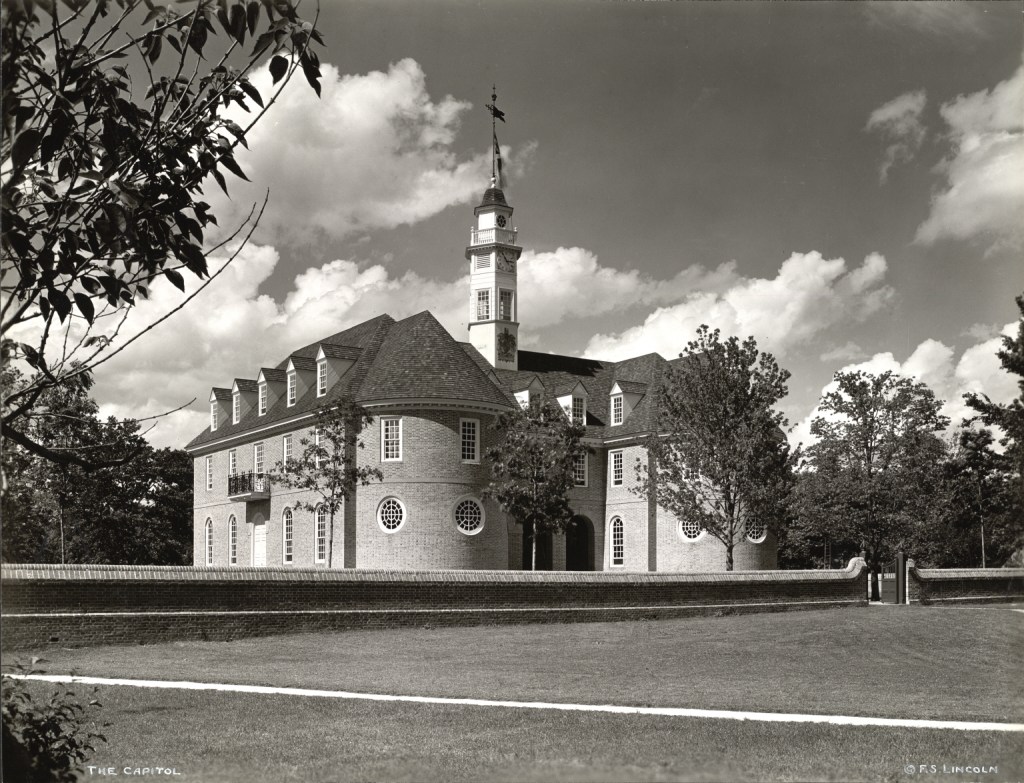
Source: Photographer: Fay Sturtevant Lincoln (American, 1894-1975) [CC BY 2.0].
New court expedites trials
In 1710, the colonial government provided for a second criminal court, the Regular Court of Oyer and Terminer, to try free persons accused of serious crimes. It met in June and December, while the General Court met in March and September. Members of the Governor’s Council (the Upper House of the legislature) sat on both courts.
1776

Source: The Virginia Declaration of Rights. Virginia Memory, Library of Virginia.
Virginia adopts state constitution
Virginia was the first state to ratify a constitution. The constitution and statutes implementing it resulted in a reorganization of the judiciary into a completely independent branch of government with clearly defined separate powers. The Virginia Declaration of Rights, the statement of rights accompanying the plan of government in the constitution, enumerated the right to confront one’s accusers in court and present evidence in court, protection from self-incrimination, and the right to a speedy trial.
August 30,1779
Source: Henry Howe, Historic Collections of Virginia (1845), p. 329.
New supreme court convenes
The Court of Appeals, Virginia’s new supreme court, sat for the first time on August 30, 1779, in Williamsburg. The court established precedent for written opinions, judicial review, and an independent judiciary and influenced the development of the U.S. Supreme Court, founded in 1789.
1788

Source: Oil on canvas, 27 x 22 in., by William L. Marcy Pendleton, circa 1897. Virginia State Art Collection.
Supreme court delivers “Respectful Remonstrance” to General Assembly
In 1788, the Court of Appeals expressed concerns to the legislature about a law imposing additional duties on the judiciary, arguing it was inconsistent with the strict separation of powers in the written constitution. The court declined to enforce the law and encouraged its repeal, establishing a precedent for judicial review. In response, legislators enacted a new statute creating an entirely separate court of appeals with five judges serving only the new court.
1831
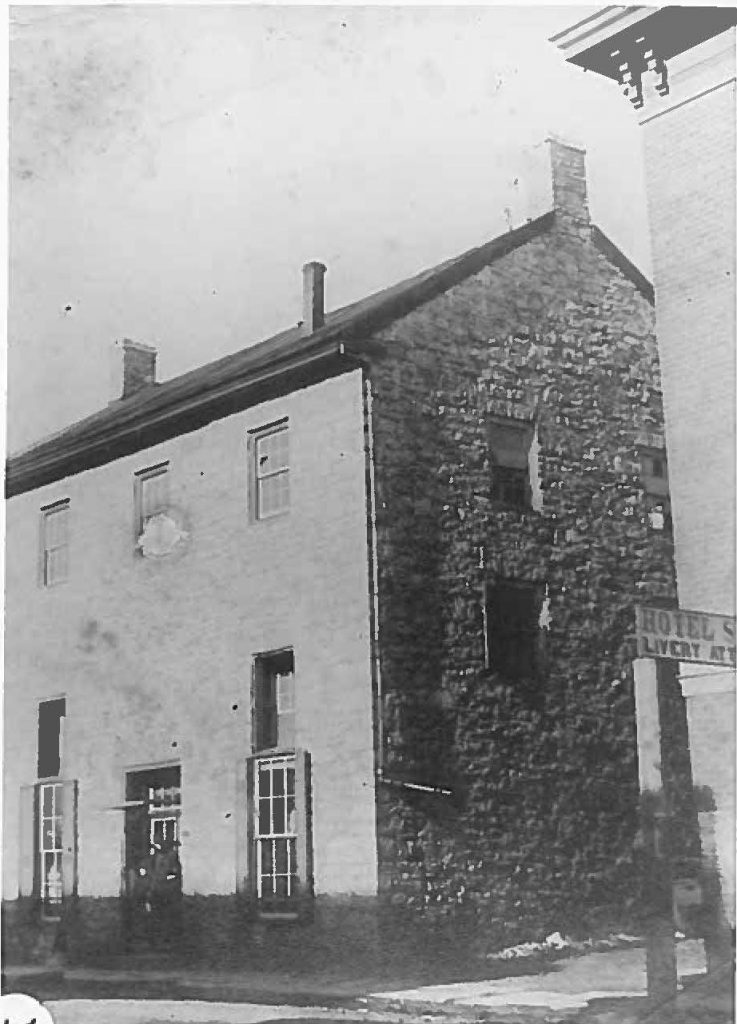
Source: Greenbrier Historical Society.
Supreme court sits west of the Blue Ridge
Delegates to the Virginia constitutional convention of 1829-30 voted against proposals to elect judges by popular vote and end lifetime tenure. John Marshall, U.S. Supreme Court Chief Justice and a delegate to the convention, spoke against both measures, arguing they threatened the independence of the judiciary. In a concession to delegates who advocated making the judiciary more responsive to the electorate, delegates voted in favor of requiring the appellate court meet once a year west of the Blue Ridge mountains. The court began holding annual sessions in present-day Lewisburg, West Virginia, in 1831.
1851
Judges elected by popular vote
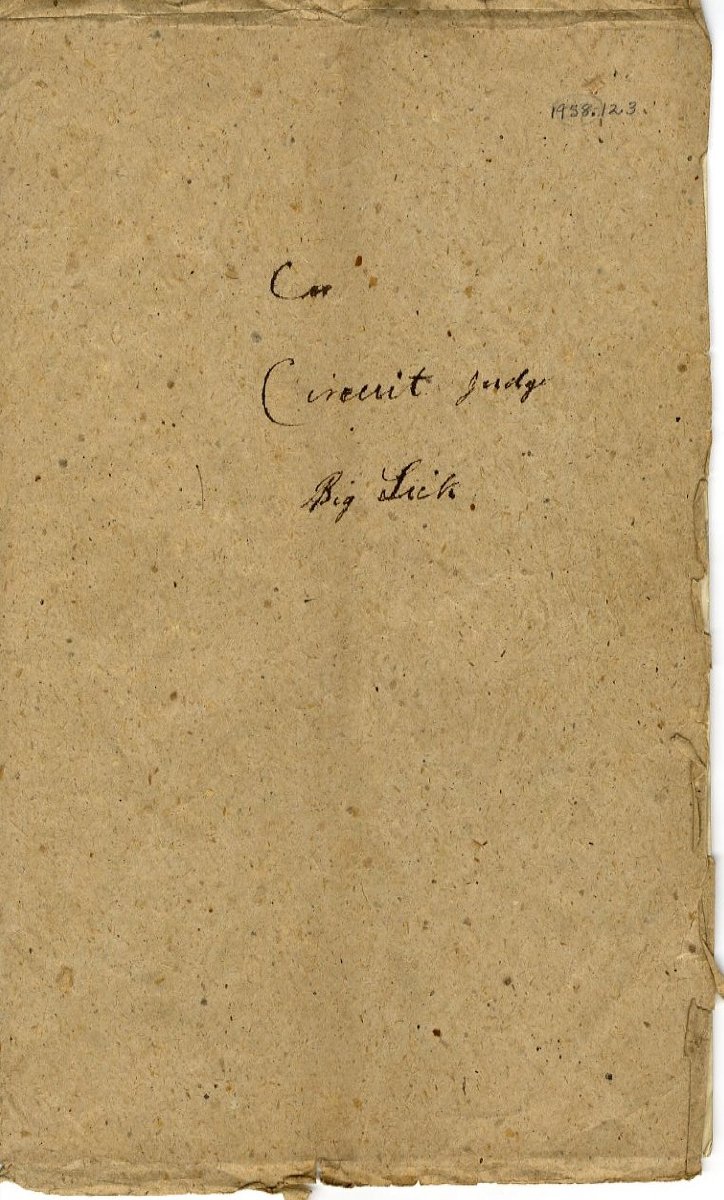
The Constitution of 1851 introduced election of judges by popular vote (as well as universal white male suffrage) and ended life tenure for judges. “The judicial election passed off very quietly yesterday,” the Richmond Daily Dispatch reported. “There was a warm strife between the friends of particular candidates but no great general interest.” The new constitution also required appellate judges to provide written opinions and preserve them with the case records.
1865

Source: Berean Hunter, Photographic History of The Civil War in Ten Volumes: Volume Five, Forts and Artillery. (1911), p. 303.
Fire destroys state courthouse and records
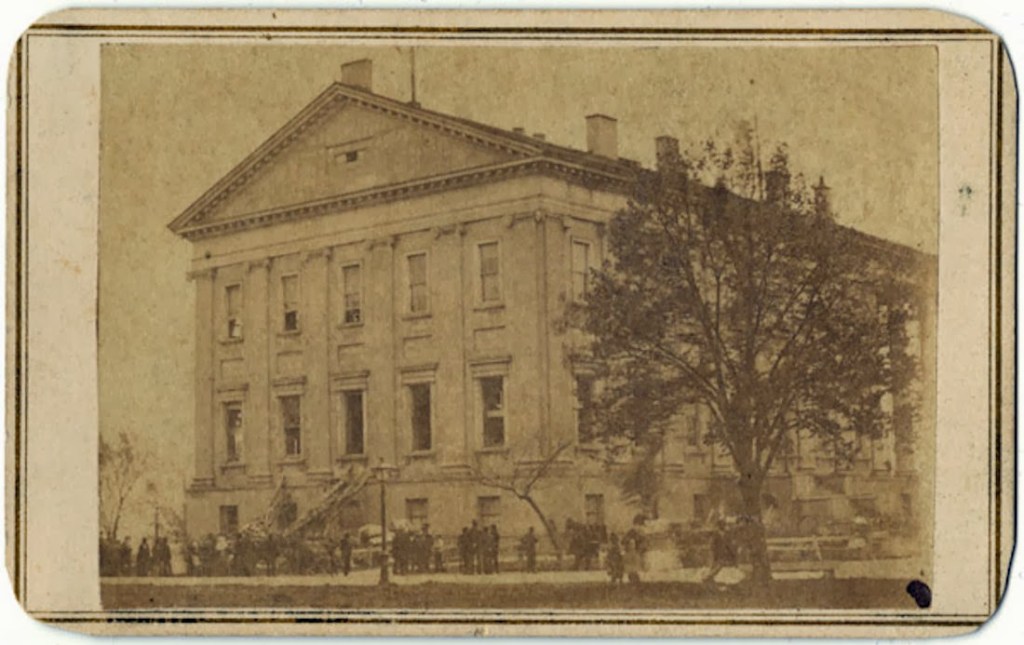
Confederate troops set fire to downtown Richmond on April 2, 1865. The spreading flames destroyed the state courthouse on the southeast corner of capitol square and most of the records of the court, as well as many local court records that had been sent to Richmond for safekeeping. Except for the order books, which were carried out of the building, the only records of the Court of Appeals before 1865 to survive were the records of the annual session in Lewisburg, which met from 1831 to 1864.
1870
General Assembly regains power to elect judges
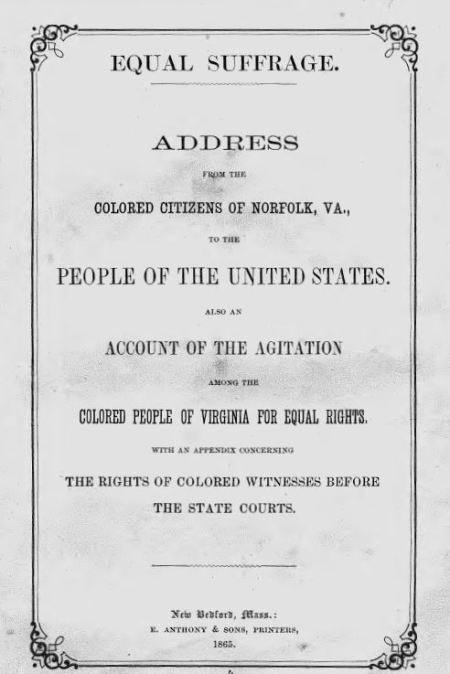
The Constitution of 1870 confirmed Virginia would not continue the experiment, begun in 1852, of selecting judges by popular vote. It also required appellate judges have previous experience as a judge or lawyer and mandated the court meet regularly at two locations outside Richmond. Beginning in 1870, the court held annual sessions in Staunton and Wytheville as well as Richmond.
1879
Source: University of Delaware Library.
Roane integrates appellate bar
William Cabell Roane was in the Supreme Court of Virginia on November 22, 1879. Born in Richmond, Roane graduated from the law school at Howard University in Washington, D.C., in 1875. He qualified to practice law in the Richmond Hustings Court on February 25, 1876, and practiced with Robert Peel Brooks, also a recent graduate of Howard University. Roane was politically active in the Republican and Readjuster parties in Virginia after the Civil War. As president of the Virginia Colored Citizens Convention, he urged Republicans to join the Readjuster party. The resulting interracial coalition enabled the party to win control of state government in 1879. Attorney John Sergeant Wise, a close ally of Readjuster leader William Mahone and son of the late Virginia Governor Henry A. Wise, presented Roane for admission to the bar.
1894-1895
Source: University of Kentucky via Kentucky Digital Library.
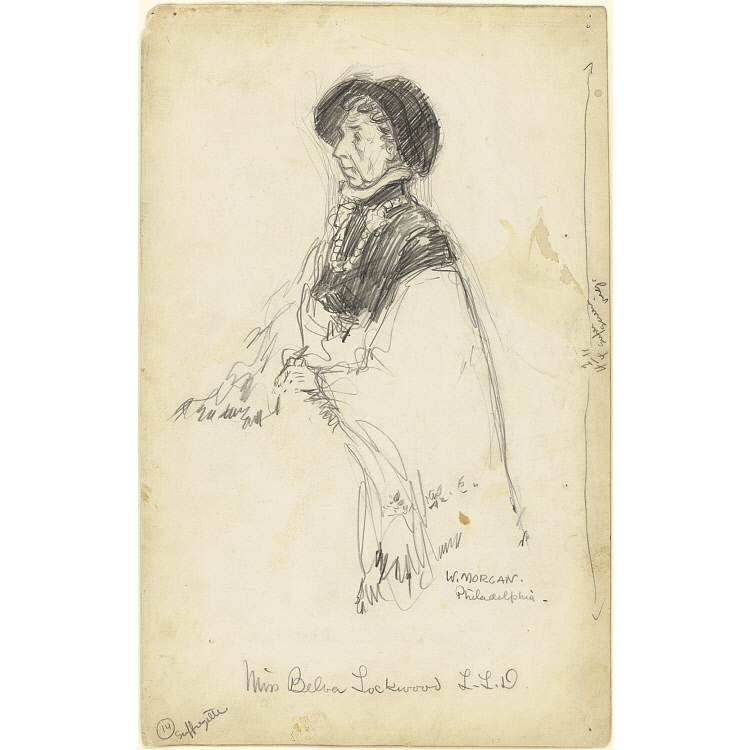
Lockwood tests exclusion of women
Washington D.C. attorney Belva A. Lockwood petitioned to practice in Virginia in March 1894. At the time, women had been admitted to the bar in most states in the north and west and the District of Columbia, but nowhere in the South. At its annual session in Wytheville in June 1894, the court voted to admit Lockwood by a vote of three to two. Judge Robert A. Richardson, who lived in nearby Marion in Smythe County, cast the deciding vote. When Lockwood returned to Richmond in April 1895 to take the qualifying oath, five new judges were on the bench. They denied her motion to qualify without explanation, declining even to hear her argument. “It would appear from this that the new court is not bound by the action of the old one,” The Richmond Dispatch reported.
1923
Source: The Cherry Tree, George Washington University Yearbbook, 1923.
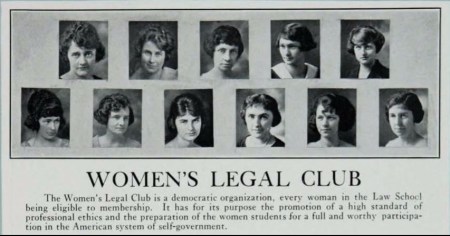
Court admits Mildred Callahan to practice
Mildred Callahan was the first woman admitted to appellate practice in Virginia, qualifiying on November 30, 1923. Newspapers reported she was the first woman in Alexandria, Virginia, to pass the state bar exam and establish a law practice there. Carrie Gregory and Rebecca Lovenstein were the first women admitted to the bar in the state, in 1920; and Lovenstein was the first to argue a case before the court, in 1925. Virginia was among the last three states to admit women to the bar, in 1920.
1928
Source: State Artwork Collection, Library of Virginia.
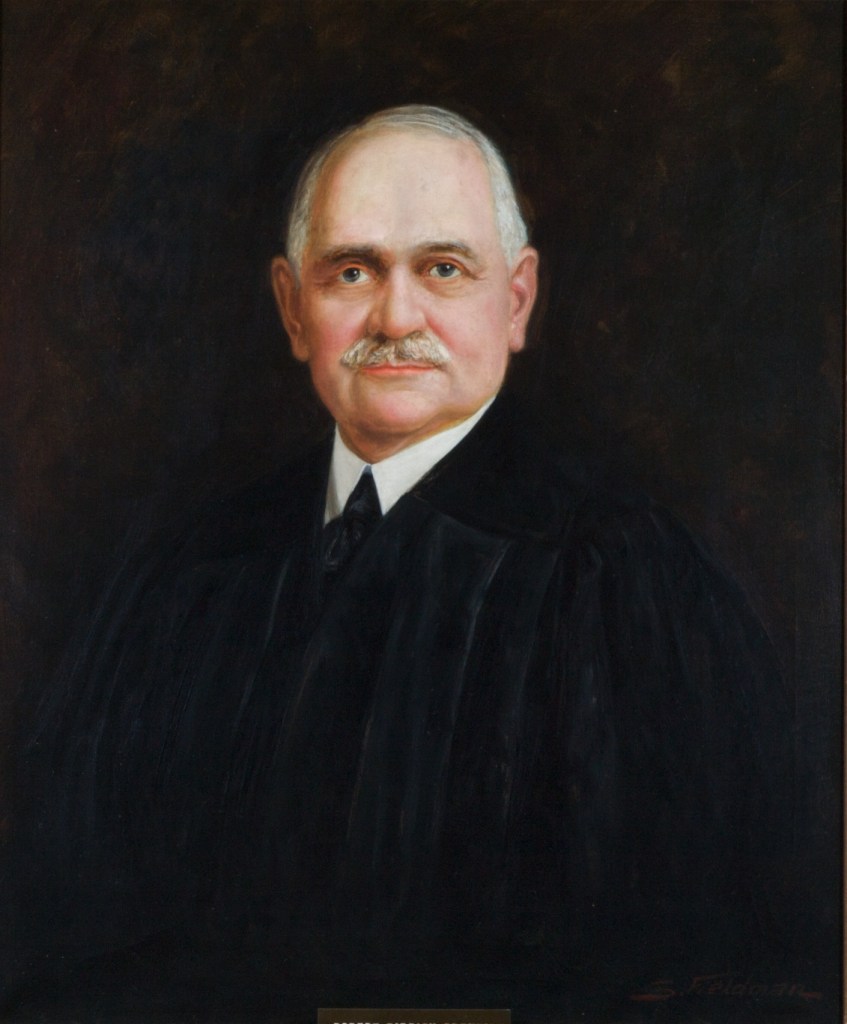
Prentis chairs commission recommending changes for courts
In 1927, Governor Harry F. Byrd appointed Chief Judge Robert Prentis chair of the Commission to Consider Changes to the 1902 Constitution. The commission recommended the supreme court meet in smaller panels, as well as en banc; and that it be expanded to seven judges, to be called justices. (The practice of wearing robes began around 1920). The commission also recommended authorizing the General Assembly to create lower courts, part of a movement to loosen restrictions on the powers of the General Assembly imposed in 1902.
1952

Source: Pittsylvania County Circuit Court.
Bennett appointed first court administrator
Hubert Bennett began work as Executive Secretary of the Supreme Court of Virginia on July 10, 1952, reporting to the chief justice, administrative head of the court system. He traveled around the state meeting with clerks of court and attorneys and gathering stories and grievances as well as statistics documenting congested dockets. He also acted as a liaison between the judiciary and the legislature. As Secretary to the Judicial Council, Bennett assisted in researching and collecting suggestions for changes in rules of procedure and supported the Council in carrying out its mandate to study judicial administration and outcomes. He retired in 1975.
1962-1968
Source: Supreme Court of Virginia Archives.
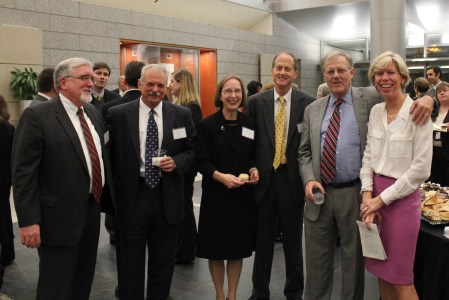
Law clerks and attorneys join court
The General Assembly appropriated money for judicial law clerks in 1962. Before that, justices relied on the Clerk of Court, secretaries, and occasionally wives and children to provide research assistance. In 1968, the court hired Overton P. Pollard as special assistant to the court to help process petitions for appeal. He was succeeded by Robert Irons. The position was changed to chief staff attorney in 1979, when John P. “Jack” Bruce was hired to succeed Irons.
1971
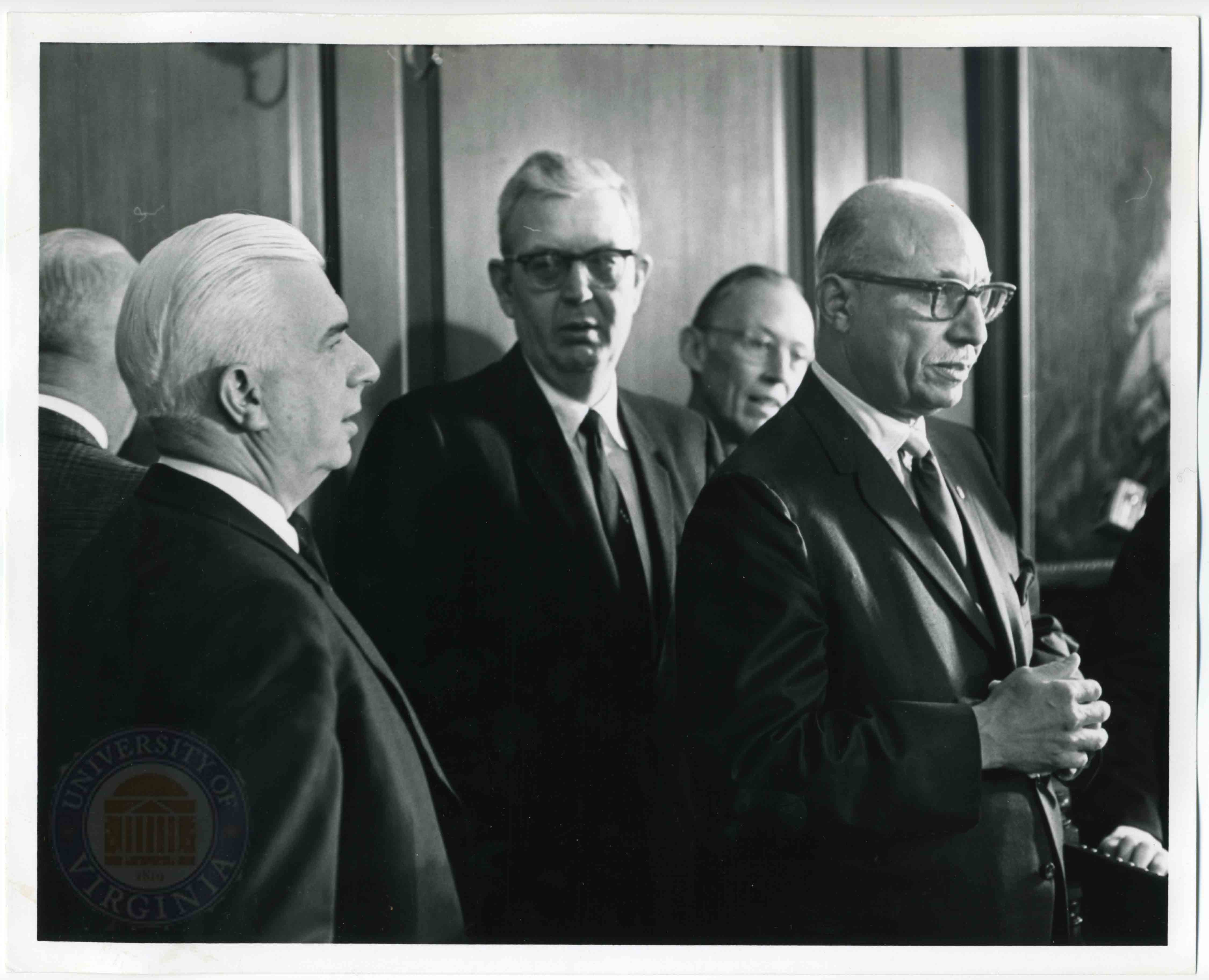
Source: University of Virginia Law Library.
New constitution changes name to Supreme Court
In 1971, a new constitution changed the name Court of Appeals to Supreme Court in anticipation of an intermediate court of appeals and conferred on the General Assembly the authority to create inferior courts. The court was no longer required to hold sessions outside Richmond. Probably most significant, according to constitution expert A.E. Dick Howard, the new constitution removed from judges the power to appoint local nonjudicial officials, a practice with roots in the colonial period that had been instrumental in shaping Virginia’s political culture.
1973
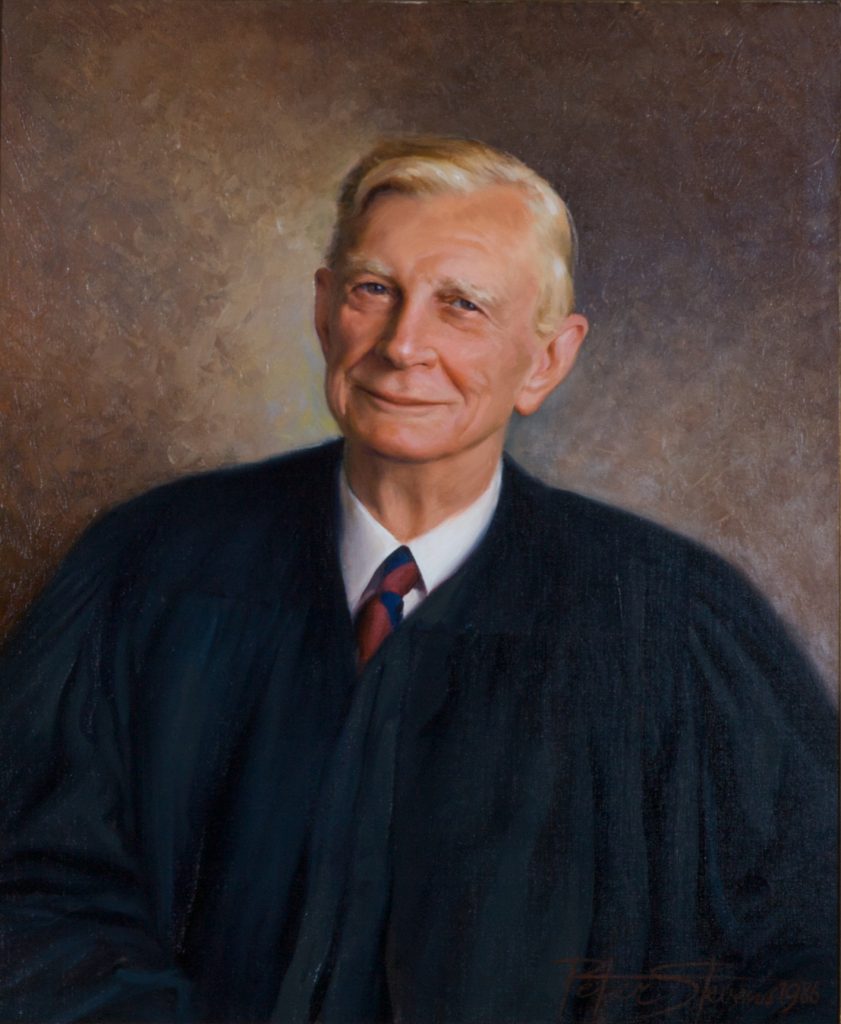
Source: Virginia State Art Collection.
State courts reorganized into unified system
Legislation creating a unified state court system took effect in July 1973. Drawing on recommendations of a commission chaired by Chief Justice I’Anson, the legislation provided for full-time district court judges to replace part-time justices of the peace, a uniform state-wide compensation system for all judges, and the expansion of the Office of the Executive Secretary to manage administrative details of the state court system. The commission also identified insufficient appellate capacity as the chief problem facing the judicial system in Virginia and recommended creation of a permanent intermediate appellate court.
1985

Photograph courtesy John Koehler and Senior (Ret.) Justice Lawrence L. Koontz, Jr.
Intermediate appellate court established
After nearly 15 years of debate, the General Assembly authorized an intermediate court of appeals in 1984. It held its inaugural session in Richmond on January 1, 1985. At the time, Virginia was the most populous state without an intermediate appellate court and only a fraction of circuit court decisions were reviewed. The court was given appellate jurisdiction in criminal cases (except death penalty cases) and domestic cases and in cases appealed from administrative agencies and the Industrial Commission. It was expanded from ten to eleven seats in 2000.
2021
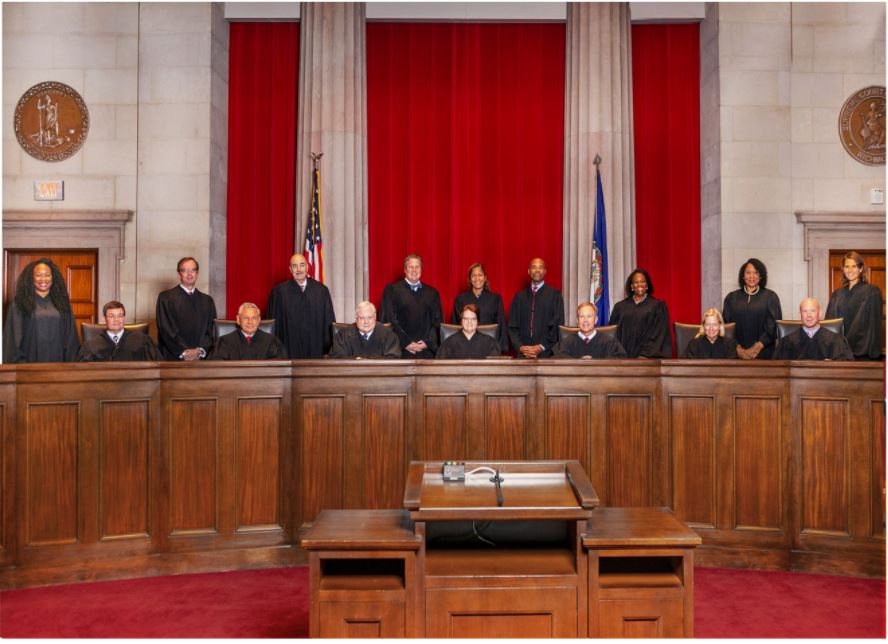
Source: Supreme Court of Virginia Archives.
Court of Appeals of Virginia is expanded
The General Assembly passed legislation expanding the jurisdiction of the Court of Appeals to include appeals of right for nearly all cases, effective January 1, 2022. To accommodate the increased caseload, the court was expanded by six judges, increasing the number of judges from 11 to 17.